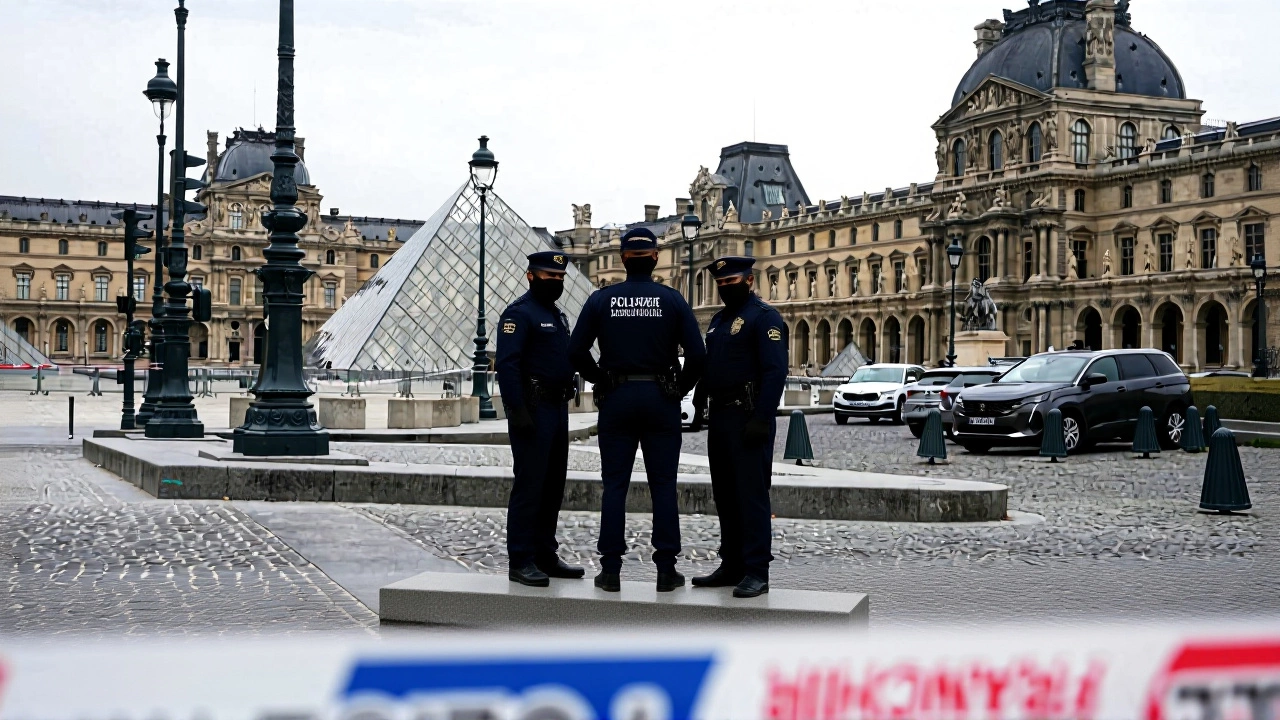
On October 18, 2024, thieves slipped through the Louvre Museum’s defenses and made off with $102 million in French Crown Jewels — using a balcony that had been flagged as a critical vulnerability six years earlier. The heist, which targeted the Apollo Gallery in the Denon Wing, didn’t just exploit poor lighting or weak patrols. It exploited bureaucracy, silence, and a failure to act on clear warnings.
What the 2018 Audit Really Said
The Van Cleef & Arpels security and safety division, headquartered at 22 Place Vendôme in Paris, was hired in 2018 by then-director Jean-Luc Martinez to conduct a comprehensive review after a surge in armed thefts near the museum. The resulting 17-page report didn’t mince words. Among its findings: surveillance cameras didn’t cover the balcony leading into the Apollo Gallery. The balcony, accessible from a service corridor, was described as “a blind spot of unacceptable risk.” Twelve of the 17 recommendations — including installing motion-sensor cameras and reinforcing access points — were never implemented.Here’s the thing: the audit wasn’t buried. It was handed off. And nobody picked it up.
The Leadership Gap That Cost Millions
Jean-Luc Martinez stepped down as director in September 2021. His successor, Laurence des Cars, says she had no idea the audit existed — until after the heist. “We found it tucked in a box labeled ‘Pre-2020 Security Reviews’ during a forensic audit of the Apollo Gallery’s history,” she told Le Monde in November 2024. The document had never entered the museum’s official risk management system. No memo. No briefing. No follow-up.That’s not negligence. It’s institutional amnesia.
Even more alarming? The Cour des Comptes, France’s national audit court, had warned the Louvre in 2019 that “security upgrades were lagging behind threat levels.” A 2015 report from the Institut National des Hautes Études de la Sécurité et de la Justice had already identified the Apollo Gallery as a high-risk zone. Yet, passwords for the security system? Still set to “Louvre.”
What Happened During the Heist
The thieves struck just after closing, at 11:07 p.m. on October 18. They disabled two internal alarms, bypassed a locked door with a master key — later traced to a disgruntled former contractor — and climbed onto the balcony. No cameras. No motion sensors. Just silence. They took 14 pieces, including the 18th-century Crown of Louis XV and the famous “Sancy Diamond.” One crown, the 17th-century “Crown of Henry IV,” was dropped during their escape. Police recovered it two blocks away, near the Seine.Four arrests followed on November 25, 2024. All are linked to a known Paris-based gang that targeted luxury boutiques in 2022 and 2023. But the real question isn’t who did it — it’s how they knew exactly where to go.
The $92 Million Fix — Too Little, Too Late?
Within days of the theft, Le Louvre announced an €80 million ($92 million) security overhaul. The first phase, launching December 1, 2024, includes:- Replacing all legacy camera software with AI-driven facial and motion recognition
- Installing 117 new infrared and thermal sensors across the museum
- Automating audit trails so no document can be archived without a digital receipt
- Requiring biweekly security briefings for all senior staff
But experts are skeptical. “This isn’t about more cameras,” says Dr. Élodie Renard, a security policy analyst at Sciences Po. “It’s about culture. The Louvre has treated security like a budget line item, not a mission. They’ve spent millions on marble floors and climate control — but not on protecting what’s inside.”
A Pattern of Oversight
This isn’t the first time the Louvre’s security has failed. In 2013, a Chinese tourist shattered a 3,500-year-old statue because protective barriers were too low. In 2017, a visitor stole a Roman coin from an unattended display. Both incidents triggered internal reviews — reviews that were never made public. The museum’s 2023 visitor count? Nearly 8.9 million. That’s 24,000 people per day. And yet, the system that was supposed to protect priceless artifacts was held together by duct tape and hope.France’s General Inspectorate of Cultural Affairs has now taken over the investigation. The 2018 audit has been submitted as evidence. And the Louvre’s legal team is bracing for lawsuits — from insurers, from the French state, and from the families of the artists whose works were nearly lost.
What’s Next?
The museum plans to publish a full audit of its past 15 years of security decisions by February 2025. Meanwhile, the French Ministry of Culture has ordered mandatory security reviews for all national museums by the end of 2025. The real test? Whether this becomes a turning point — or just another footnote in a long history of missed warnings.Frequently Asked Questions
How did the 2018 audit go unnoticed for six years?
The audit was physically handed over during the 2021 leadership transition but never logged into the Louvre’s digital risk management system. No staff member was assigned to track its recommendations, and no follow-up meetings were scheduled. It remained in a physical file cabinet, untouched, until after the heist.
Who is responsible for the security failure?
Responsibility is layered. Former director Jean-Luc Martinez commissioned the audit but didn’t ensure its implementation. Laurence des Cars inherited it without proper onboarding. The museum’s internal compliance team failed to audit prior recommendations. And France’s Ministry of Culture, which funds the Louvre, never mandated accountability for security upgrades.
Why wasn’t the balcony secured after the 2018 warning?
The museum cited budget constraints and prioritized visitor experience over physical security. Installing cameras on the balcony would have required structural changes and disrupted gallery aesthetics. In a cultural institution obsessed with appearance, functionality was sacrificed — until the jewels disappeared.
What’s the likelihood the stolen jewels will be recovered?
Experts believe most pieces were broken down for resale on the black market. The Sancy Diamond, for example, is small enough to be smuggled out of Europe. Only the Crown of Henry IV was recovered because it was too bulky and flashy to sell discreetly. Interpol has issued a global alert, but recovery odds remain below 20%.
Could this happen at other major museums?
Absolutely. The British Museum, the Met, and the Uffizi have all faced similar criticisms. Many rely on aging systems, fragmented oversight, and cultural reluctance to install visible security. The Louvre’s case is extreme — but not unique. Without systemic reform, another heist isn’t a matter of if — but when.
What’s being done to prevent future cover-ups?
France’s Ministry of Culture is now requiring all national museums to use a centralized digital audit tracker, with mandatory quarterly reviews by independent auditors. Any unaddressed recommendation older than 18 months must be reported directly to Parliament. The Louvre’s internal audit team has also been dissolved and replaced with a new unit reporting directly to the Ministry.
Maxwell Radford
I'm Maxwell Radford, a passionate news analyst living in Australia. My area of expertise includes business, general news, and arts, and I take immense pleasure in delivering deep insights about these subjects to my readers. I have worked with different media outlets enhancing my knowledge and honing my writing skills. Capturing the nuances of finance and the creative world in my writings is what I strive for.